

Front-Load vs Top-Load Washing Machines: Is It Time to Rethink Your Choice?
 Compare front-load vs top-load washing machines on price, capacity, running costs, cycle times and accessibility before you buy.
Summary
- Top load washing vs front-load washing machine? Which one should you pick?
- Compare the actual purchase price and running costs rather than assuming a top loader is always the cheaper choice.
- Front loaders generally use less water and energy, while top loaders usually finish standard washes sooner.
- Your laundry layout, loading comfort and usual wash size matter more than a long list of extra features.
Front-load vs top-load washing machine- Which one should you get? We compare front-load vs. top-load washing machines on purchase price, consumption, cycle length and accessibility. Discover a round-up of top loaders and front-loaders that can offer the capacity and programs you need.
A washing machine needs to fit more than the space beside the laundry sink. It needs to fit the school-uniform rush, weekend bedding changes and how you move through your home.
Perhaps you’ve always chosen a top loader because it felt affordable, familiar and easier to load. Those reasons still matter. But they’re worth reconsidering when an efficient front loader offers the capacity and programs you need at a comparable sale price.
When comparing front-load vs top-load washing machines, look beyond the loading position. Purchase price, consumption, cycle length and accessibility all affect everyday use. Neither format wins every category, but a closer comparison may change your shortlist.
Front loader vs top loader washing machines: is price still the deciding factor?
Top loaders are generally cheaper upfront, but front-loaders are available from entry-level prices through to premium models. Compare current prices at your preferred capacity before deciding one type is outside your budget.
Compare washing machines by the loads you wash, the space you have and the costs you’ll pay. Door position alone won’t tell you which appliance best suits everyday household life.
Top loaders are generally cheaper upfront and have faster standard cycles. Front loaders typically cost more but use less water and energy, are gentler on clothes and extract more moisture during the cycle spin. They can also make better use of limited laundry space.
These are general differences, not guarantees for every model.
Westinghouse 10kg EasyCare 700 Top Load Washer (WWT1084C7WA)-Best for larger loads and practical cycle choices

Best for: Families wanting generous capacity and clearly differentiated everyday programs.
When getting several loads onto the line matters, cycle options can outweigh other features. Westinghouse 10kg EasyCare 700 Top Load Washer includes Fast 20, Daily 45 and Full Load 60 programs, each with its own intended use.
- A 10kg capacity accommodates larger washing loads.
- PreMix+ blends detergent with water before spraying it onto clothing.
- A soft-close glass lid makes everyday handling gentler.
- Rated consumption is 122L per wash; installation needs 1460mm height with the lid open.
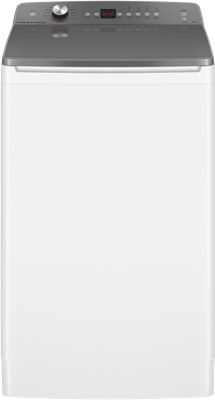
Fisher & Paykel 8kg Series 5 Top Loader Washer (WL8058G1)- Best for familiar loading with load sensing

Best for: Households that want top access with adaptable washing options.
A top loader can still be the right choice when its opening and controls suit you. Fisher & Paykel 8kg Series 5 Top Loader Washer offers 14 cycles and sensors that assess load size and soil level.
Its 4.5-star energy rating also challenges the assumption that every front loader automatically beats every top loader on energy efficiency.
- Rated water consumption is 82L per cycle, with a 4-star WELS rating.
- Load sensing adjusts water use to the wash.
- Four spin-speed selections help tailor the cycle.
- A 580mm width suits narrower spaces, provided the lid has opening clearance.
Compare the price gap
Imagine a basic front loader and a top loader of similar capacity are both on sale. If their prices are close, the front loader’s lower consumption may make it worth considering. If the price gap is substantial and you wash infrequently, upfront affordability may matter more.
An affordable front loader doesn’t need premium styling or dozens of specialist programs to be useful. Focus first on capacity, suitable everyday cycles, efficiency and support.
Spending more makes sense when it solves a frequent problem, such as needing a suitable shorter cycle or reducing drying time. Compare those benefits rather than assuming more functions mean better value.
Choose capacity for normal loads
Capacity describes the weight of dry laundry a machine can hold. Not every program can handle that amount. Quick-wash and delicate programs may have smaller load limits, so check the manual.
For example, someone regularly washing small loads may find an 8kg machine more practical than a larger model. A family washing bulky bedding should check the bedding program and load guidance, not just the headline capacity.
Buying bigger isn’t automatically better. Larger machines usually need more water and electricity, so choose based on your regular needs.
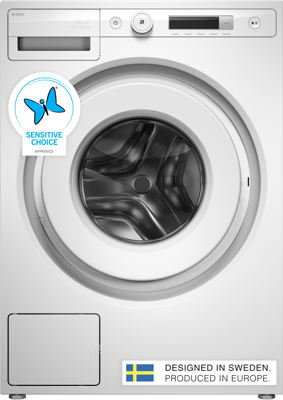
ASKO 8kg Classic Steel Seal Front Load Washing Machine (W1084W.AU)- Best for fabric care and simpler seal maintenance
Best for: Regular washers seeking specialist fabric programs and a different approach to door-seal maintenance.
If you wash frequently, construction and maintenance deserve attention. ASKO 8kg Classic Steel Seal Front Load Washing Machine removes the conventional rubber door bellows through its Steel Seal design, reducing one area that needs regular cleaning.

Its 8kg capacity, 1400rpm maximum spin and 5-star WELS rating make it worth considering for households that prioritise water use and garment care.
- Uses a rated 56L per wash on its specified WELS program.
- Offers wool, delicates, sportswear and outerwear programs for varied wardrobes.
- Quattro Construction helps reduce vibration during washing and spinning.
- Measures 595mm wide and 850mm high for a standard laundry layout plan.
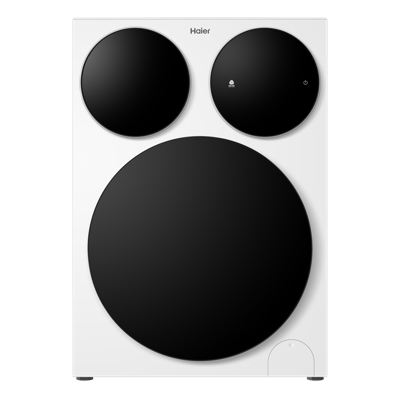
Haier 9kg 600 Series MultiWash Washing Machine (HTDWF90CTW1)- Best for separate loads in one footprint
Best for: Households washing separate clothing categories at the same time.
Front loaders are also changing what’s possible within a familiar laundry space. Haier 9kg 600 Series MultiWash Washing Machine fits three independently operating drums into one under-bench design, with a total capacity of 9kg.
It’s an option for households that regularly separate laundry. However, total capacity across multiple drums isn’t the same as a single 9kg drum for a bulky item.
- Run one, two or three drums independently at different temperatures.
- Automatic dosing supports up to 29 washes between refills under Haier’s stated conditions.
- A single water connection simplifies the multi-drum arrangement.
- The 850mm height supports under-bench planning; main-drum ratings are 4.5 stars for energy and water.

Compare energy consumption between front load and top load
Compare Energy Rating Labels on machines with similar capacities. Look at annual electricity consumption and Energy Star Rating. Washing-machine energy figures assume a daily load using the nominated setting, so they won’t necessarily match your household’s bills.
The WELS water label shows litres per wash and the tested cycle. Check both when comparing models.
Front loaders can save water. Consumption reports suggest average consumption of 56L for an 8kg front loader versus 119L for an 8kg top loader, using a 3.5kg test load. Individual results vary. Front loaders generally use less water, but check WELS litres and energy consumption for each model. The featured 8kg ASKO and Fisher & Paykel illustrate why: their published water figures are 56L and 82L respectively, yet both have 4.5-star energy ratings. These are label-program figures, not promises for every wash.
Compare similar capacities, the tested programs and consumption figures before choosing. A higher star rating helps, but your load size and washing habits determine whether the appliance suits daily life.
Compare washing and drying time
A top loader can be a better fit when you need to finish several standard loads quickly. Front-loader cycles are often longer because they use less water. Some exceed three hours.
Quick wash isn’t always a substitute. It may suit small, lightly soiled loads rather than a full basket of muddy clothes.
Consider the whole process, though. Front loaders’ higher spin speeds can remove more water, shortening drying afterwards. If you use a dryer regularly, that may offset some inconvenience from a longer wash. Higher spin speeds can remove more moisture, potentially shortening the time clothes need on the line or in the dryer.
Measure access, not just width
A front loader needs space for its door, your basket and loading movements. A top loader needs room above for the lid. Both need suitable access to taps, drainage and power.
For a compact laundry, a front loader may fit beneath a bench or support an approved stacked dryer arrangement. Check appliance compatibility and installation instructions before planning either.
Try loading both styles in-store. Consider bending, reaching into a deep tub, control placement and whether you can comfortably retrieve small items. Familiarity alone doesn’t establish which design is more accessible.
Choose benefits you’ll actually use
For a front loader, prioritise the essentials. Does it handle your normal loads? Are the everyday cycles suitable? Can you reach the controls and door comfortably?
When considering a higher-priced option, identify the benefit you’re buying. A useful shorter program, better moisture extraction or a more workable layout may matter more than a large program count.
The traditional reasons for choosing a top loader haven’t disappeared. Faster standard cycles and comfortable loading can still be decisive. But when price is the main reason, compare today’s actual offers before ruling out a front loader.
The best front load vs top load washing machines comparison starts with your routine. Check purchase price, consumption, cycle limits and loading comfort together. An affordable front loader may cover everything you need, while spending more should deliver a benefit you’ll notice every week.
COMPARE WASHING MACHINES ON NATIONAL PRODUCT REVIEW
If you’re choosing a washing machine, front loaders generally offer lower consumption, stronger moisture extraction and flexible installation. Top loaders remain useful for faster standard washes and households that prefer their loading position.
FAQs
Generally, they use less water and energy. Compare similarly sized models and label figures, then consider your usage and utility rates.
Not necessarily. Quick programs often suit smaller, lightly soiled loads. Check the program’s capacity and instructions.
Often, but only with a compatible arrangement and the required installation hardware. Check both manufacturers’ instructions.
It depends on your reach and mobility. Test low-door access against reaching into the top loader’s tub before deciding.
Realted Content:
- Black Friday Washing Machine Buying Guide
- Spend vs Save: What to Do When it’s Time for a New Appliance
- AI-Enabled Laundry Combos: Smarter Washing Without the Hassle
Featured Products

SKU: HTDWF90CTW1
9kg 600 Series MultiWash
View Product

SKU: W1084W.AU
8kg Front Load Washing Machine
View Product

SKU: WL8058G1
8kg Top Load Washing Machine - White
View Product


SKU: WWT1084C7WA
10kg Top Load Washing Machine
View Product